- 3
- 3
- 7
- 16

Lake Manyara National Park: The Jewel of the Rift Valley
Nestled at the base of the dramatic Gregory Rift Escarpment, Lake Manyara National Park is a relatively small but incredibly diverse wilderness area. Ernest Hemingway once described it as the “loveliest I had seen in Africa,” and its beauty remains just as striking today. Covering approximately 330 square kilometers of which nearly two thirds is covered by the lake itself during the wet season the park serves as a vital sanctuary for a wide variety of wildlife in a landscape that transitions rapidly from dense groundwater forests to open floodplains and soda lake shores.
The park is defined by its verticality. To the west, the sheer golden brown wall of the Rift Valley escarpment rises hundreds of meters, providing a stunning backdrop to the lush, green canopy below. This unique geography creates a microclimate that supports habitats rarely seen in such close proximity, making it a perfect introduction to the northern safari circuit.
The Groundwater Forest and the Primates
Upon entering the park, travelers are immediately immersed in a tall, mahogany and fig tree groundwater forest. Unlike most forests in the region, this lush environment is fed by underground springs rising from the base of the rift wall rather than rainfall. The canopy is alive with activity; it is home to the highest concentration of baboons in the world. Large troops are often seen grooming one another or foraging along the roadside, while blue monkeys and Sykes’ monkeys leap through the branches above.
As the forest thins out, it gives way to acacia woodlands, which are the famous haunt of Lake Manyara’s tree climbing lions. While the exact reason for this behavior is debated some suggest it is to escape the heat or the biting insects on the ground it is a rare sight that has become synonymous with the park.
The Alkaline Lake and the Pink Horizon
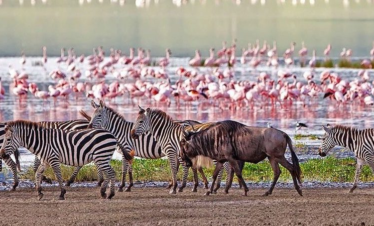
The heart of the park is Lake Manyara, a shallow, alkaline lake that expands and contracts with the seasons. The shoreline is often a shimmering ribbon of pink, thanks to the thousands of lesser and greater flamingos that congregate here to feed on the lake’s algae. They are joined by a vast array of water birds, including pelicans, storks, and herons, making it a premier destination for birdwatchers. More than 400 species of birds have been recorded here, often visible from the park’s hippo pool, where large pods of hippopotami wallow in the mud.
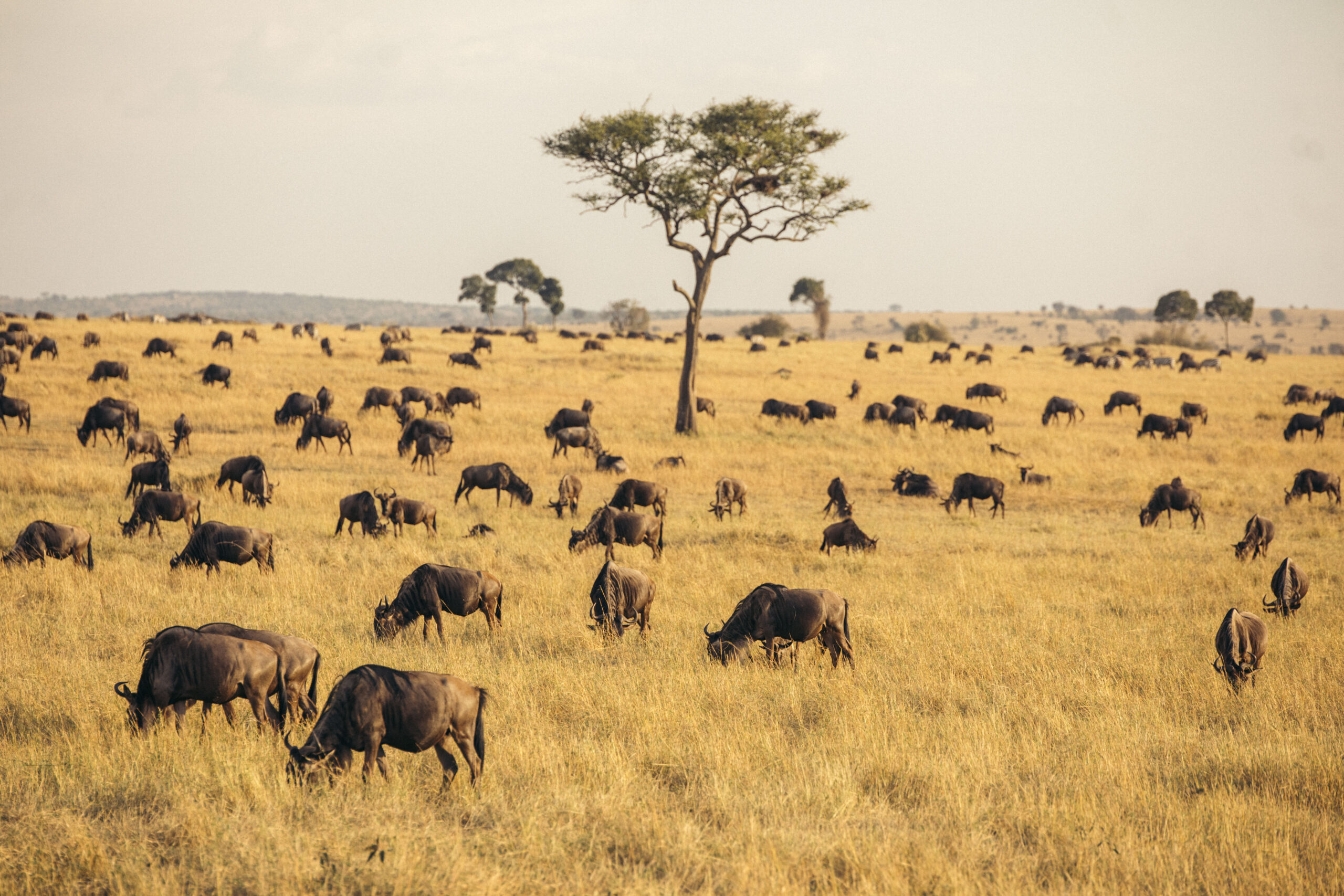
The grassy floodplains surrounding the lake provide grazing for large herds of buffalo, wildebeest, and zebra. Despite its smaller size, the park is also home to a healthy population of elephants. Seeing these giants emerge from the thick forest onto the open lake shore, framed by the rift wall, is one of the most iconic sights in the region.
The Maji Moto Hot Springs
At the southern end of the park lies Maji Moto, a series of natural sulfur hot springs that bubble up from the deep fractures of the Earth’s crust. These springs are a clear indicator of the tectonic forces that created the Rift Valley. While the water is too hot for a soak, the surrounding marshy area is a fascinating geological feature and often attracts wildlife looking for mineral rich soil and water.
Seasonal Transitions
The park offers a different experience depending on when you visit. During the wet season (November to May), the lake is at its fullest, the waterfalls cascade down the escarpment, and the vegetation is a deep, vibrant green. This is the best time for birdwatching and canoeing, as the high water levels allow for a unique perspective of the park from the lake itself.
The dry season (June to October) is better for traditional game viewing. As the lake recedes and the forest dries out, animals become more concentrated around the remaining water sources and are easier to spot through the thinning foliage. Regardless of the season, Lake Manyara offers a condensed and intimate safari experience that highlights the incredible ecological diversity of Tanzania.